Easter Celebrations: Transforming Your Church with Spring Decorations and Vestments
As the pinnacle of the Christian calendar, Easter Sunday marks the ultimate celebration of Christ’s victory over death and the fulfillment of God’s redemptive promise. Such a monumental feast deserves our highest attention to detail, particularly in how we dress our clergy and adorn our sacred spaces. By transforming the sanctuary with radiant vestments and vibrant spring decorations, we visually manifest the explosive joy and triumphant hope of the Resurrection for all who gather.
Section 1: The Significance of Easter
Easter is not merely one holiday among many; it is the foundational event upon which the entire Christian faith rests. Without the Resurrection, the Gospel message would be incomplete, making Easter the absolute center of theological and corporate worship. It is the definitive declaration that light has conquered darkness, life has defeated death, and humanity has been offered a path to eternal reconciliation.
While culture often treats Easter as a single day, the Church traditionally celebrates Easter as a glorious 50-day liturgical season spanning from Easter Sunday to the Feast of Pentecost. This extended period, known as Eastertide, allows the faithful to deeply immerse themselves in the reality of the Risen Christ and process the profound implications of the empty tomb.
The overarching themes of the Easter season are resurrection, supernatural renewal, and unshakable hope. It is a time of spiritual rebirth, echoing the physical awakening of the earth during spring, and reminding the congregation that all things are actively being made new through Christ.
These powerful themes are directly reflected in the visual landscape of the church. The solemn, stripped-back atmosphere of Lent and Holy Week instantly gives way to an environment bursting with light, color, and grandeur, signaling to everyone who enters that the season of mourning is officially over.
Section 2: Easter Liturgical Colors
The dramatic shift from the shadows of Good Friday to the brightness of Easter morning is told through a brilliant change in the liturgical color palette. White and gold take center stage as the primary colors of the season, instantly lifting the spirit of the sanctuary.
-
White serves as the primary canvas for the season, symbolizing purity, holiness, the joy of the Resurrection, and Christ's ultimate victory over the grave. It recalls the dazzling white garments of the angels at the empty tomb.
-
Gold is intertwined with white to represent the majesty, divine glory, and uncompromised celebration of Christ the King. It adds a layer of royalty and brilliance befitting the grandest feast of the year.
Depending on regional traditions and architectural styles, some churches gracefully incorporate variations of cream, ivory, or alabaster. These softer tones offer a warm, elegant depth while maintaining the essential brightness and purity required for the season.
Section 3: Selecting Easter Vestments
When the clergy processes into the sanctuary on Easter morning, their attire should immediately command a sense of holy celebration. Transitioning into immaculate white and gold vestments provides a powerful, non-verbal proclamation that Christ is risen indeed.
To achieve this triumphant aesthetic, altar guilds should prepare pristine white stoles, chasubles, and matching altar paraments. Utilizing textiles with a subtle sheen or rich texture helps capture the sanctuary lighting, adding a dynamic sense of movement to the service.
To truly elevate the celebration, look for vestments featuring intricate gold accents, metallic piping, and detailed Christological embroidery, such as the Chi-Rho or the Alpha and Omega. These elegant details draw the eye to the sacred mysteries being celebrated at the altar and the pulpit.
Featured for Easter: Elevate your chancel this season with our premium White Cathedral Stoles. Featuring exquisite, heavy gold-thread embroidery and crafted from breathable, wrinkle-resistant fabric, these stoles are designed to maintain their regal splendor from the sunrise service through the entire 50 days of Eastertide.
Investing in high-quality vestments elevates the entire liturgical experience, conveying to the congregation that the mystery of the Resurrection is worthy of our very best. Ensuring a flawless match between your clergy’s vestments and the sanctuary’s paraments creates a seamless, professional visual harmony that honors the gravity of the day.
Section 4: Decorating Your Church for Easter
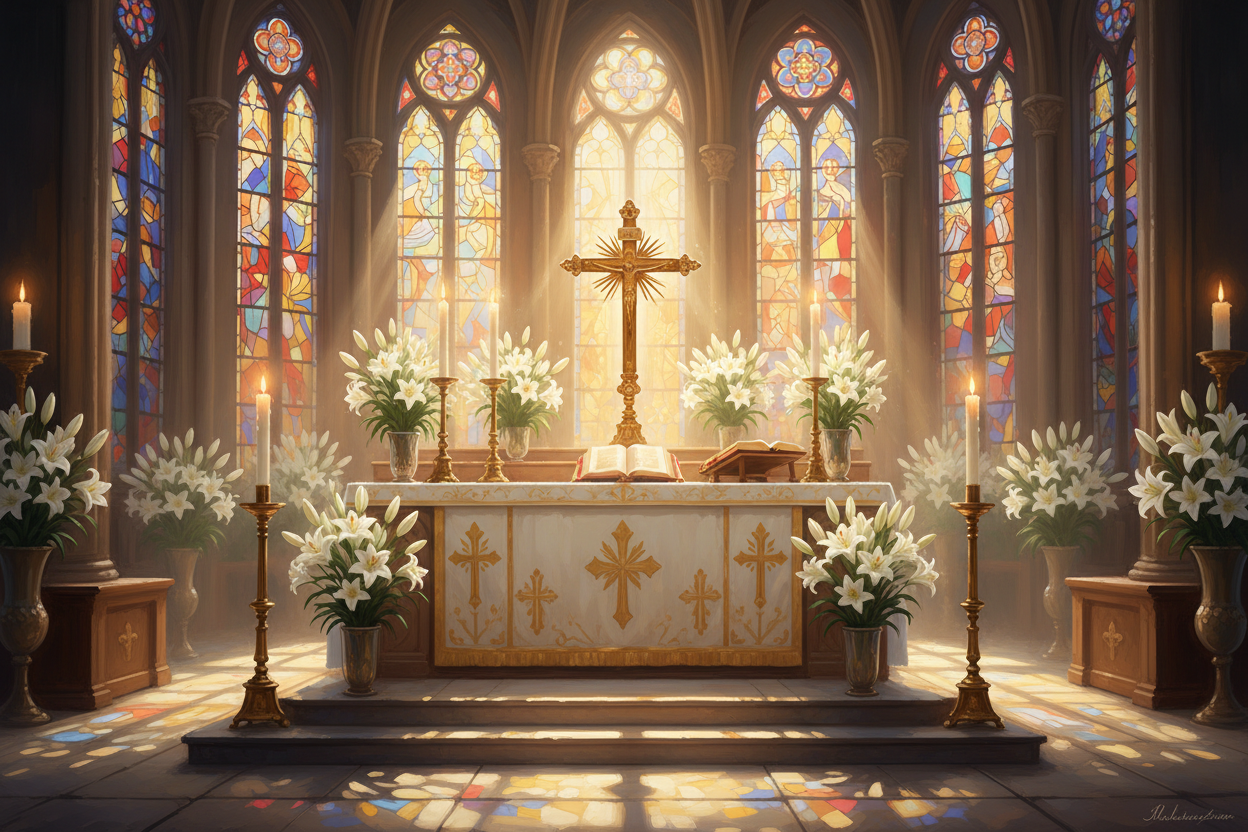
Transforming the sanctuary for Easter requires a joyful abundance of life and light. The most iconic element of this transformation is the placement of white Easter lilies, which symbolize purity and new life, alongside an array of colorful spring flowers like tulips and hyacinths arranged around the cross and altar.
Complement these floral displays by cascading rich white and gold fabrics or drapes from the high cross, processional banners, or balcony railings. The movement of these fabrics adds a festive, regal atmosphere that contrasts sharply with the bare sanctuary of Holy Week.
Light plays a critical role in symbolizing the Resurrection. Ensure the Paschal Candle is prominently displayed and lit, and maximize the use of altar candles and natural light to signify that the Light of the World has shattered the darkness of the tomb.
The goal is to design an atmosphere that feels overwhelmingly festive yet deeply reverent. Every design choice should point toward the joy of new life while maintaining the sacred dignity of the space. By strictly coordinating your floral arrangements and fabric drapes with your white and gold vestments, you create a cohesive, breathtaking environment that amplifies the morning's praise.
Section 5: Easter Season Beyond Easter Sunday
A common administrative misstep is allowing the church's visual splendor to deflate immediately after Easter Sunday. Because the Easter season sustains its joyful celebratory status for a full 50 days, the sanctuary should reflect that enduring joy well into the spring.
To maintain the theological integrity of Eastertide, churches should keep their white and gold decorations and vestments on display throughout the entire 50-day period. This serves as a continuous visual reminder to the congregation that the Resurrection is an ongoing reality, not just a historical day on the calendar.
To keep the environment looking vibrant and dignified over seven weeks, the altar guild should routinely rotate out wilting flowers for fresh arrangements. Swapping tired lilies for fresh white roses or seasonal spring greenery keeps the sanctuary looking pristine and cared for. At the very end of the season, the church will prepare for another dramatic shift, transitioning to fiery red to celebrate the descent of the Holy Spirit on Pentecost Sunday.