Article: Advent Season: Preparing Your Church with Liturgical Colors and Vestments
Advent Season: Preparing Your Church with Liturgical Colors and Vestments
The season of Advent marks the beautiful, expectant beginning of the liturgical year, a sacred time dedicated to preparing our hearts and churches for the birth of Christ. As congregations anticipate the joy of Christmas, the visual environment of the sanctuary plays a crucial role in grounding them in this period of reflection. By intentionally selecting the proper vestments and sanctuary decorations, church leaders can deeply enhance the spiritual experience and guide their community through this season of holy watching.
Section 1: What is Advent?
Advent, derived from the Latin word adventus meaning "coming," is a season of expectant waiting and preparation that spans the four Sundays leading up to Christmas. It is a profound time of dual anticipation: we look back to Christ's humble birth in Bethlehem, while simultaneously looking forward to his promised second coming.
In the Christian calendar, Advent serves as a spiritual reset. Rather than rushing straight into the celebratory festive noise of the holiday season, Advent invites the faithful into a quieter space of introspection. It is a period designed to foster a sense of longing for God's presence in a broken world, encouraging believers to make room in their hearts for the light of Christ.
Throughout the four weeks, the liturgy structurally focuses on four core themes: hope, peace, joy, and love. Each week builds upon the last, progressively cutting through the darkness and guiding the congregation closer to the miracle of the Nativity.
To traditionally prepare for this season, churches often adjust the pacing and tone of their services. The music becomes more contemplative, the lighting may be softened, and the visual landscape of the altar shifts away from Ordinary Time into a setting that mirrors the solemn, yet hopeful, nature of the season.
Section 2: Liturgical Colors for Advent
The visual shift of Advent is primarily communicated through color. Traditionally, purple (or violet) and royal blue are the predominant hues used during this season, each carrying deep theological significance that shapes the atmosphere of worship.
-
Purple is the historical color of Advent, symbolizing penitence, sovereignty, and preparation. It connects Advent to Lent, reminding us that the child born in the manger is the King who came to redeem humanity through his sacrifice.
-
Blue, specifically a deep Sarum blue, has grown in popularity across many contemporary and mainline traditions. It symbolizes hope, expectation, and the night sky, while also honoring the Virgin Mary as she awaits the birth of her son.
On the third Sunday of Advent, known as Gaudete Sunday (meaning "Rejoice"), the solemn tone briefly lifts to anticipate the coming joy. On this day, many churches transition to rose or pink, offering a beautiful, visual breath of fresh air that signals to the congregation that their waiting is nearing its fulfillment.
Section 3: Choosing the Right Vestments
Selecting the proper vestments is a critical responsibility for church administrators and altar guilds. When the clergy steps up to the table wearing the correct seasonal colors, it provides an immediate, non-verbal cue that aligns the hearts of the congregation with the global Church's liturgical rhythm.
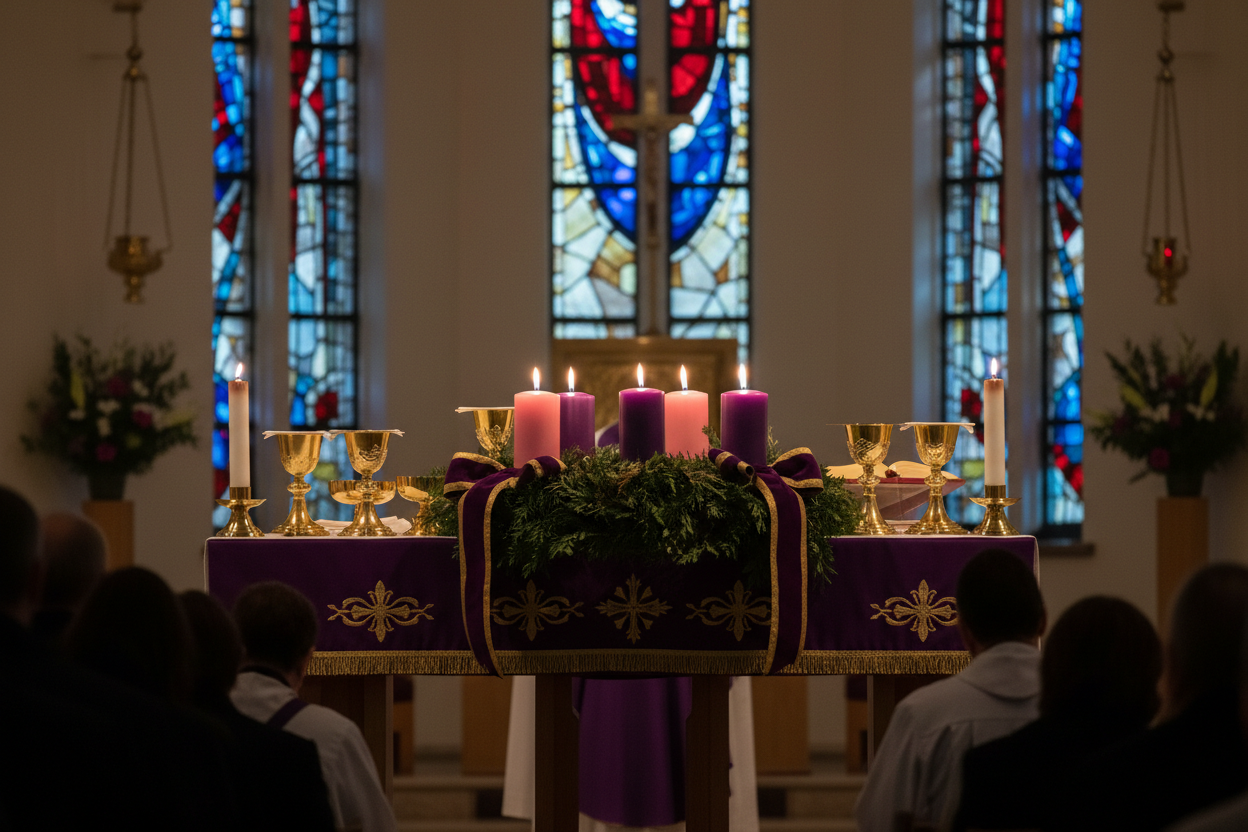
During Advent, clergy should be equipped with high-quality purple or blue stoles and chasubles, while the altar, pulpit, and lectern should be adorned with matching paraments. Consistency in these garments keeps the focus on the sacred mysteries being celebrated rather than creating visual distractions.
Pro-Tip for Church Leaders: If your budget is a consideration this season, our Reversible Parament Sets offer an elegant, practical solution. Featuring rich Advent purple on one side and celebratory Christmas white on the other, these sets allow your altar guild to seamlessly transition the sanctuary overnight for Christmas Eve services.
Investing in premium, well-crafted vestments dramatically enhances the dignity of the worship experience. Fabric that drapes beautifully and features understated, elegant embroidery commands respect and fosters an atmosphere of reverence. To complete the look, ensure that your clergy's vestments directly coordinate with your altar paraments to present a unified, professional appearance from the chancel.
Section 4: Decorating Your Church for Advent
Decorating for Advent requires a delicate balance; the sanctuary should feel expectant, but not yet fully celebratory. The focal point of this transformation is traditionally the Advent wreath, featuring three purple (or blue) candles and one rose candle nestled in a circle of evergreens, with a central white Christ candle lit on Christmas Eve.
To complement the wreath, incorporate sweeping fabrics and drapes in your chosen seasonal hue across balconies, pillars, or the altar rail. Use natural elements like fresh evergreen branches, pinecones, and simple, understated floral arrangements. Avoid poinsettias and glittering tinsel until Christmas Eve, keeping the focus entirely on the beauty of the waiting period.
The golden rule of Advent decoration is to respect the reflective, minimalist nature of the season. The environment should feel intentional and slightly stark at the beginning, gradually growing brighter and more vibrant each week as more candles are lit.
For the most impactful presentation, always coordinate your sanctuary decorations with your vestments and paraments. Utilizing a cohesive color palette ensures that every wreath, fabric drape, and clerical stole works together to tell a singular, powerful story of anticipation.
Conclusion
Intentional preparation is the key to an impactful Advent season, and the visual elements of your church are vital tools in guiding your congregation on this spiritual journey. By investing in quality vestments and thoughtful decorations, you honor the sacred traditions of the Church and create a beautiful space for worship.