Article: Pentecost & Ordinary Time: Choosing the Right Liturgical Colors and Vestments
Pentecost & Ordinary Time: Choosing the Right Liturgical Colors and Vestments
The feast of Pentecost stands as one of the most dynamic days of the church year, celebrating the dramatic descent of the Holy Spirit and the birth of the Christian mission. Immediately following this fiery celebration, the church enters Ordinary Time, a deep and steady season that anchors the vast majority of the liturgical calendar. For church leaders and altar guilds, intentionally selecting the proper vestments and paraments for both seasons is vital to seamlessly guiding congregations from high-energy celebration into sustained spiritual growth.
Section 1: Understanding Pentecost
Pentecost holds a monumental position in Christian history, observed exactly 50 days after Easter Sunday. It marks the conclusion of the Easter season and celebrates the definitive moment when the resurrected Christ fulfilled his promise to send a Comforter to sustain his followers. This day is widely recognized as the birth of the global Church, transitioning the disciples from fearful isolation into emboldened witnesses.
The scriptural account of Pentecost is filled with intense, awe-inspiring imagery. As the apostles gathered in Jerusalem, the Holy Spirit arrived with the sound of a rushing, mighty wind, and divided tongues of fire came to rest upon each of them. Instantly filled with the Spirit, they were miraculously empowered to speak in diverse languages, allowing them to preach the Gospel clearly to visitors from every nation.
Consequently, the core theological themes of Pentecost are centered on holy fire, transformative wind, and uncompromising divine power. It is a feast day that celebrates spiritual empowerment, the breaking down of cultural barriers, and the active, living presence of God moving within the community.
Churches traditionally capture this holy energy by completely transforming the visual landscape of the sanctuary. The quiet grace of the late Easter season is replaced by an environment designed to feel alive, active, and intensely focused on the movement of the Spirit, a shift heavily communicated through specific liturgical vestments and decor.
Section 2: Pentecost Liturgical Colors
To visually communicate the explosive energy of the Holy Spirit, the Church turns to red as the traditional liturgical color for Pentecost. This bold choice immediately commands attention and shifts the emotional temperature of the room the moment the congregation enters.
-
Red serves as a direct symbol of the burning fire of the Holy Spirit and the tongues of flame that rested on the apostles. It additionally represents the divine power of God and the passionate, self-sacrificing blood of the early Christian martyrs.
-
While standard liturgical red is the norm, some communities incorporate rich variations of deep crimson, scarlet, or fiery orange. These subtle tonal shifts add visual texture, evoking the natural, shifting movement of a roaring flame.
The visual impact of a sanctuary washed in red is profound. It snaps the congregation out of the familiar routine, serving as a striking reminder that the Holy Spirit is not a passive concept, but an active, consuming fire meant to ignite our faith and drive the church forward.
Section 3: Pentecost Vestments and Decorations
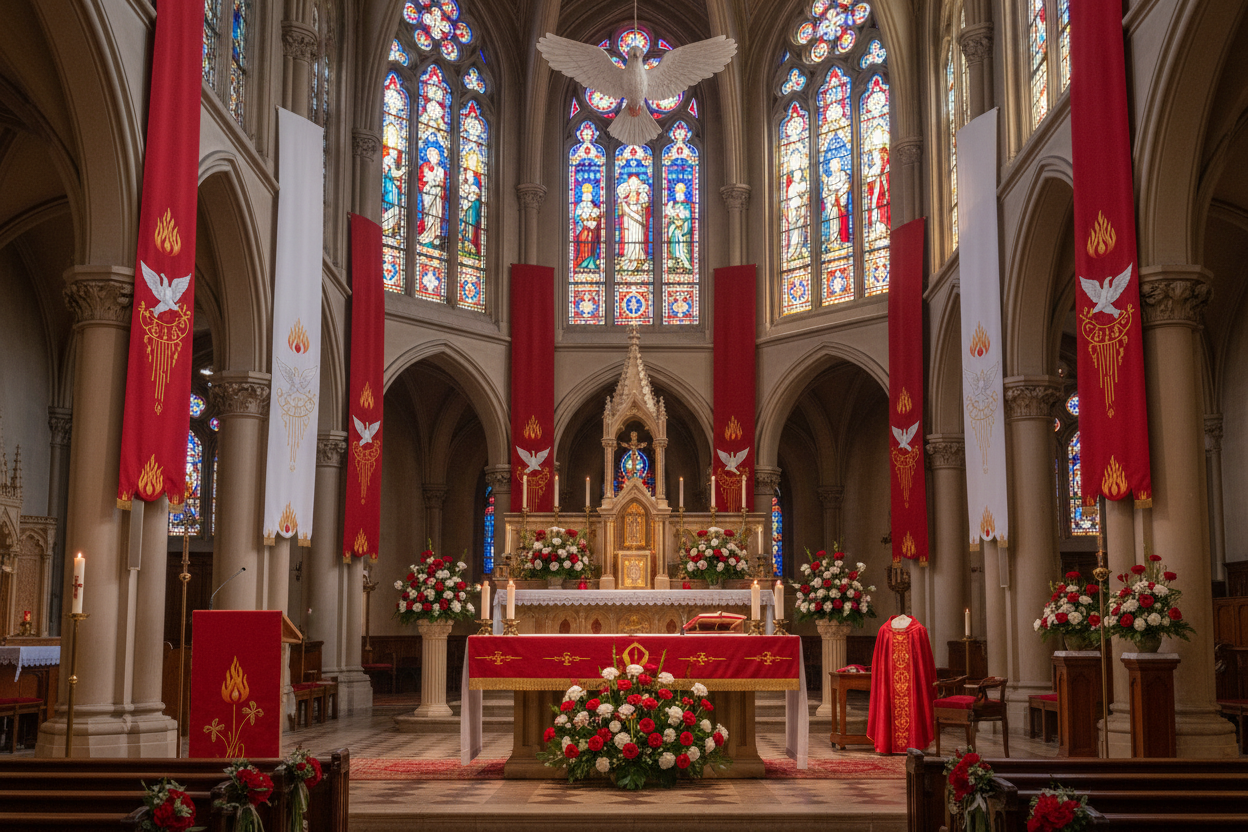
When preparing the chancel for Pentecost, the goal is to create an atmosphere that feels vibrantly alive. Clergy should be adorned in premium red stoles and chasubles, while the altar, pulpit, and lectern are draped in coordinating red paraments. Because Pentecost is a brief but high-impact feast, these pieces should look intentionally regal and celebratory.
To echo the biblical narrative, altar guilds should incorporate flame-like elements into the sanctuary decorations. This can be achieved through cascading silk drapes in shades of red, orange, and gold hung from the processional cross, alongside an intentional use of tall altar candles and dramatic lighting to emphasize the theme of divine illumination.
Complement the textiles by flanking the chancel with abundant red floral arrangements, such as geraniums, carnations, or autumn foliage. When arranged thoughtfully around the altar and baptistery, these natural elements enhance the sense of vitality and harvest celebration.
Featured for Pentecost: Make this year's celebration unforgettable with our Pentecost Flame Vestment Series. Featuring brilliant crimson damask fabric beautifully embroidered with descending dove and flame motifs, these stoles and paraments are meticulously crafted to provide a stunning focal point for your feast-day liturgy.
Section 4: Understanding Ordinary Time
As the fire of Pentecost settles, the church transitions directly into Ordinary Time. This season begins on the Monday following Pentecost Sunday and, after a brief interruption for Trinity Sunday, runs continuously through the summer and autumn months until the arrival of Advent.
Ordinary Time is by far the longest season of the liturgical calendar, typically spanning roughly 33 to 34 weeks. Because it occupies over half of the year, it serves as the foundational rhythm of the church, grounding the community in consistent, week-by-week worship.
A common misconception is that "Ordinary" implies mundane or boring. In reality, the name comes from the word ordinal, meaning "numbered." It simply signifies the ordered, successive weeks (e.g., the 10th Sunday in Ordinary Time) used to count our collective journey through the year outside of the major festival cycles.
The theological focus during these weeks shifts away from specific historical events in the life of Christ and onto the ongoing work of the Church. The overarching themes are spiritual growth, deep biblical learning, and the daily, practical walk of discipleship, allowing the lessons of Easter and Pentecost to bear fruit in everyday life.
Section 5: Ordinary Time Liturgical Colors
To match the themes of cultivation and endurance, green is established as the universal color for Ordinary Time. Just as green dominates the natural world during the growing seasons, it serves as a living metaphor for a healthy, maturing faith.
-
Green traditionally symbolizes spiritual growth, steadfast hope, and the promise of new life. It points to the refreshing, life-giving water of the Holy Spirit that quietly nourishes the roots of the church.
-
This color represents the steady, ongoing journey of faith. It reminds us that spiritual maturity rarely happens in an instant; rather, it is cultivated over time through patient prayer, regular worship, and consistent community service.
The visual nature of green vestments and paraments is inherently calming and grounded. It provides the sanctuary with a sense of stability and rest, creating an ideal environment for regular teaching, reflection, and steady communal focus.
Section 6: Selecting Vestments for Ordinary Time
Because Ordinary Time spans so many months, the vestments and paraments used during this season endure the most significant wear and tear. It is highly recommended to invest in green stoles, chasubles, and altar cloths crafted from premium, durable fabrics like heavy brocades or wrinkle-resistant polyester blends that maintain their shape and color over time.
Green is an exceptionally versatile color that pairs beautifully with a wide variety of altar styles and sanctuary materials. To add depth to the long season, look for green vestments that feature subtle accents of gold embroidery, or motifs representing the harvest, such as wheat stalks, grapevines, or the Trinity shield.
To ensure your chancel maintains a professional and consistent appearance throughout the summer and fall, ensure that your altar cloths, pulpit falls, and clergy stoles are perfectly dye-matched. This clean, unified look keeps the congregation's focus entirely on the liturgy and the preaching of the Word.
Featured for Ordinary Time: Explore our Evergreen Liturgical Collection, designed specifically for the rigorous demands of Ordinary Time. Our reversible green-and-purple parament sets offer unmatched durability and classic elegance, ensuring your sanctuary looks pristine from June through November.
Section 7: Transitioning Between Seasons
Managing a smooth, timely transition between the fiery red of Pentecost and the steady green of Ordinary Time is a key responsibility for any church leadership team. Changing the vestments and paraments promptly at the start of a new liturgical season signals an intentional respect for the Church's historic rhythms.
Planning these transitions well in advance prevents last-minute stress for your altar guild and ensures that all garments are cleaned, pressed, and ready for service. Marking these visual shifts has deep spiritual significance, helping the congregation mentally and emotionally transition from a posture of intense celebration into a mindset of steady, focused growth.
By ensuring your sacristy is fully stocked with dedicated, high-quality vestment sets for each distinct season, your parish will always be prepared to tell the full story of the Gospel through the beautiful, changing colors of the Christian year.
Conclusion
Understanding and honoring the distinct liturgical colors and seasons is a powerful way to enrich your community's corporate worship experience. From the urgent fire of Pentecost to the steady growth of Ordinary Time, the visual environment of your sanctuary speaks volumes.